




Overrunning Clutches Explained: How They Work & Why They're Essential in Modern Machinery
 Dec 26, 2025|
 View:3191
In the world of mechanical power transmission, few components are as clever yet underappreciated as the overrunning clutch. Also known as a freewheeling clutch or sprag clutch, this ingenious device plays a crucial role in countless machines we rely on daily - from our cars to industrial equipment. This comprehensive guide will explain in simple terms how these clutches work, where they're used, and why they're so important for machine reliability and efficiency.

Understanding the Basics: What Is an Overrunning Clutch?
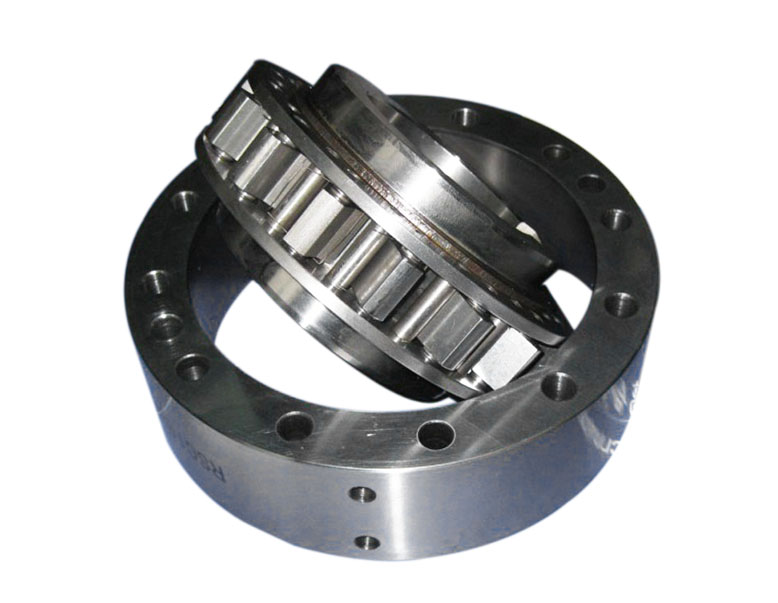
An overrunning clutch is a specialized mechanical component that allows torque to be transmitted in one direction while permitting free rotation (freewheeling) in the opposite direction. Imagine it like a bicycle's freewheel mechanism - when you pedal forward, the wheel turns, but when you stop pedaling, the wheel can keep spinning independently.
The most common type is the sprag clutch, which uses specially shaped metal elements called sprags that wedge between inner and outer races when torque is applied in the driving direction. These sprags tilt to engage when rotated one way, but collapse to allow free rotation when turned the opposite way.

How Does Overrunning Clutch Actually Work?
Let's break down the operation of a typical sprag clutch:
Engagement Phase (Power Transmission):
When the input shaft rotates in the driving direction
The sprags tilt and wedge between the inner and outer races
This creates a solid connection that transmits torque
Overrunning Phase (Freewheeling):
When the output tries to rotate faster than the input
Or when rotation reverses
The sprags collapse inward, allowing free rotation
This automatic engagement/disengagement happens in milliseconds without any electronic controls or operator input, making these clutches incredibly reliable.
Key Applications Where Overrunning Clutches Shine
Overrunning clutches are used in nearly every industry that relies on rotating machinery. Here are some common examples:
Transmissions: Automatic and semi-automatic transmissions use overrunning clutches to shift gears without interrupting power. Each gear has a clutch that locks when needed and unlocks when the next gear takes over.
Starter Motors: When an engine starts, the starter motor spins the engine. Once the engine is running faster than the starter, the clutch disengages, preventing the engine from "overdriving" and damaging the starter.
Aerospace and Aviation
Helicopters: Helicopter rotors use overrunning clutches (called "freewheeling units") to protect the engine. If the engine fails, the rotors can spin freely (autorotate) due to air resistance, allowing the helicopter to land safely. The clutch prevents the rotors from dragging the engine, which would stop the autorotation.
Jet Engines: Auxiliary power units (APUs)—small engines that power aircraft systems on the ground—use overrunning clutches to disconnect from the main engine once it’s running.
Industrial Machinery
Conveyors: As mentioned earlier, overrunning clutches prevent reverse movement in belt conveyors, common in factories, mines, and airports.
Pumps and Compressors: These machines often handle pulsating loads. Overrunning clutches smooth out the power flow, reducing vibration and extending the life of motors and pumps.
Renewable Energy
Wind Turbines: Wind turbine blades spin a generator to produce electricity. If wind speeds drop suddenly, the generator might slow down, but the blades (driven by momentum) keep spinning faster. The overrunning clutch lets the blades overrun, preventing damage to the generator.
Solar Trackers: Solar panels that follow the sun use small motors with overrunning clutches. If wind pushes the panels faster than the motor, the clutch disengages, protecting the motor from strain.
Washing Machines: The spin cycle in washing machines uses overrunning clutches to transition between agitating and spinning, ensuring smooth operation.
Power Tools: Drills, saws, and lawnmowers use clutches to prevent the tool from being "kicked back" when the blade or bit gets stuck. If the tool jams, the clutch disengages, protecting the user and the motor.
Why Overrunning Clutches Are Better Than Alternatives
You might wonder: Why not use other devices, like brakes or manual clutches? Overrunning clutches have unique advantages:
Automatic Operation: They work without human or electronic control, reacting instantly to speed differences. This makes them reliable in critical systems where delays could be dangerous.
Compact Design: Overrunning clutches, especially sprag clutches and freewheeling clutch bearings, are small and lightweight, fitting into tight spaces where larger devices can’t.
Low Maintenance: They have few moving parts and don’t require frequent adjustments or lubrication, reducing downtime and costs.
Durability: Made from high-strength materials like hardened steel, they withstand high speeds, temperatures, and loads, even in harsh environments (e.g., factories with dust or moisture).
How to Choose the Right Overrunning Clutch
Selecting the right clutch depends on your specific needs. Here are key factors to consider:
Torque Requirements: Choose a clutch that can handle the maximum torque your system produces. Too small, and it will fail; too large, and it will be inefficient.
Speed Range: Consider the maximum speed the clutch will experience, both in locked and overrunning modes. High-speed applications need clutches designed to reduce friction and heat.
Environment: If the clutch will be exposed to dust, water, or chemicals, choose a sealed model (like some freewheeling clutch bearings) to protect internal parts.
Space Constraints: In small machines (e.g., robotics), freewheeling clutch bearings save space by combining clutch and bearing functions.
Overrunning clutches, particularly sprag clutch designs, solve numerous mechanical challenges in power transmission systems. Their ability to automatically engage and disengage makes them indispensable in applications ranging from vehicle drivetrains to heavy industrial equipment.
When selecting an overrunning clutch for your application, it's crucial to work with an experienced sprag clutch bearing manufacturer who can provide technical expertise and quality products. Suma, with decades of experience in precision clutch manufacturing, offers reliable solutions tailored to meet your specific requirements. Their engineering team can help ensure you get the right clutch solution for optimal performance and longevity in your application.


I want to comment



Recent News
1.FSO Overrunning Clutch for Mine Cone Crusher
2017-09-212.What is the Difference Between a Sprag Clutch and an Overrunning Clutch?
2025-03-033.Spare parts of Drones Freewheel Clutch Bearing FE
2016-03-124.Installation tips of One Way Bearing
2015-10-245.The working principles of one-way clutch
2016-04-28




View More(Total0)Comment lists